القرية التركية
تناول الطعام مثل السلاطين
اختيار اللغة
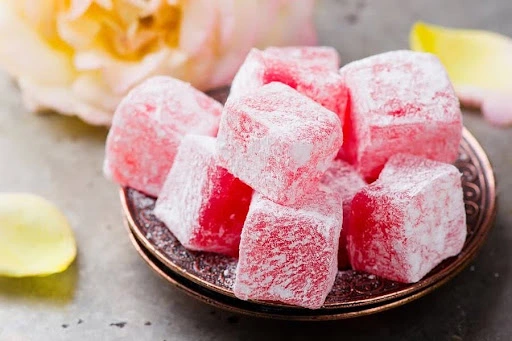
Turkish delight is a beloved confection known for its soft, chewy texture, delicate flavours, and centuries-old connection to Turkish cuisine. But what exactly is Turkish delight made of, and where did this iconic sweet originate? Traditionally prepared using sugar, starch, and water, Turkish delight can be enhanced with ingredients such as rosewater, citrus flavours, nuts, and dried fruits, creating a wide range of varieties.
In this guide, we explore the history of Turkish delight, the traditional Turkish delight ingredients used to make it, and the different types of Turkish delight you can find today. From classic rose-flavoured lokum to nut-filled varieties, discover why this elegant sweet remains an important part of Turkish food culture and a favourite treat around the world.
Turkish delight, known in Turkey as lokum, is a traditional confection made from sugar and starch cooked into a soft, chewy gel. Originated in the Ottoman Empire, where confectioners in Istanbul refined lokum over the centuries into the soft, perfumed sweet known today, long associated with Turkish hospitality and celebrations. It is typically cut into small cubes dusted with powdered sugar, with a tender, slightly springy bite. Classic flavours include rose, lemon, orange, and mint, and wide varieties are studded with pistachios, hazelnuts, or walnuts. Unlike gummy candy or fudge, it contains no gelatin or dairy, which gives it a lighter, delicately perfumed character all its own.
Traditional Turkish delight, or lokum, is made with a relatively simple combination of ingredients that creates its distinctive soft, chewy texture and delicate sweetness. While recipes can vary depending on the flavour and variety, the main Turkish delight ingredients typically include sugar, cornstarch, and water, along with flavourings and optional nuts or dried fruits.
Sugar provides the sweetness and helps create the smooth, chewy consistency associated with traditional Turkish delight. The amount used can vary depending on the recipe and desired sweetness.
Cornstarch is an important ingredient in Turkish delight because it helps thicken the mixture and gives lokum its characteristic soft, jelly-like texture. It also helps the confection hold its shape once it has cooled and set.
Water is combined with the sugar and cornstarch during preparation. It helps dissolve and blend the ingredients before the mixture is slowly cooked to achieve the desired consistency.
Rosewater is one of the most traditional flavourings used in Turkish delight, giving the confection its distinctive floral aroma. Other varieties may feature citrus, pomegranate, mint or other flavours, depending on the recipe.
Pistachios, hazelnuts, walnuts and other nuts can be added to create richer and more textured Turkish delight sweets. Some varieties may also include dried fruits or fruit-based flavours for additional sweetness and flavour.
One of the reasons this dish remains popular is the variety of flavours, textures and fillings available. While classic lokum is traditionally soft and lightly flavoured, modern recipes offer everything from floral and fruity options to nut-filled varieties. Exploring the different types of Turkish delight is a great way to discover how this traditional sweet can suit different tastes and occasions.
Some popular varieties include:
Turkish delight is the perfect finish to a Turkish meal, so if you are wondering where to eat first, read our guide to the best restaurant serving authentic Turkish food in Dubai
Traditional Turkish delight takes patience, steady heat, and close attention to consistency. Here is how it comes together:
Making this at home takes time and patience, but it is just one part of a much bigger food tradition. If you would rather enjoy authentic Turkish flavours freshly prepared for you, read about the authentic Turkish food experience in Dubai, where you can sit down to traditional dishes and finish with a sweet treat.
It is traditionally served in small pieces alongside Turkish coffee or Turkish tea, making it a popular accompaniment during relaxed conversations and social occasions. It can also be offered after meals as a light sweet treat, particularly when sharing food with family and guests. During celebrations, gatherings, and special occasions, assorted varieties are often presented on serving plates for everyone to enjoy.
Turkish delight is also closely associated with Turkish hospitality and is commonly offered to visitors or beautifully packaged as a thoughtful gift. Today, there are also alternatives such as sugar-free Turkish delight for those looking for different options, although traditional varieties are generally prepared with sugar.
Turkish delight is only one part of the warm hospitality that defines Turkish dining. If you would like to experience more of it, from savoury dishes to sweet endings, explore our guide to Turkish food in Dubai and find out what to order on your next visit.
The dish has a special place in Turkish culture and is closely associated with hospitality, generosity, and sharing. Offering sweets to guests is a long-standing tradition, and small pieces of lokum are often served when welcoming visitors into a home or sharing coffee and tea. It is also commonly given as a gift during visits, holidays, and other special occasions, often presented in decorative boxes or assortments.
At celebrations and family gatherings, it provides a simple way to share something sweet with others and bring people together. Its presence alongside traditional drinks and after meals further reflects the role of sweets in Turkish dining traditions. Beyond its flavour, Turkish delight represents the importance placed on welcoming guests, showing appreciation and celebrating meaningful moments with family and friends.
Turkish delight reflects a culture that values welcoming guests and sharing good food. To experience that warmth at the table, discover this Turkish restaurant in Jumeirah, where traditional dishes and generous hospitality come together.
When choosing authentic Turkish delight, paying attention to its ingredients, texture, and overall presentation can help you find a more enjoyable and traditional sweet. Whether you are looking for Turkish delight in Dubai for yourself or as a gift, consider the following:
From its traditional ingredients and delicate texture to its rich history and cultural significance, Turkish delight remains a cherished part of Turkish cuisine. If you would like to experience authentic Turkish flavours in Dubai, Turkish Village offers a welcoming setting to discover the tastes and traditions of Türkiye.
Make your Reservation and enjoy a memorable Turkish dining experience.
Turkish delight is known as lokum in Turkey. It is a traditional confection made primarily from sugar and starch and is available in a variety of flavours, textures, and fillings.
Traditional Turkish delight is generally made with sugar, starch, and water rather than gelatin. Its characteristic soft and chewy texture comes from the cooking and thickening of the starch-based mixture.
Rose is one of the most traditional and recognisable Turkish delight flavours. Other classic options include lemon, orange, mint, and varieties containing pistachios or other nuts.
Traditional Turkish delight is a sweet confection, but the overall taste can vary depending on the flavour and ingredients used. Floral, citrus, fruit, and nut varieties can offer different flavour profiles alongside the sweetness.
The freshness of Turkish delight depends on its ingredients, preparation, packaging, and storage conditions. It should generally be kept in a cool, dry place and protected from moisture to help maintain its texture and flavour.
Turkish Village offers an opportunity to experience traditional Turkish flavours in Dubai, from savoury dishes to sweet treats such as Turkish delight. Make your Reservation to enjoy a Turkish dining experience.