القرية التركية
تناول الطعام مثل السلاطين
اختيار اللغة
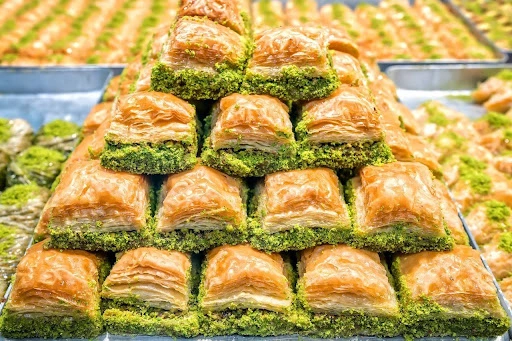
Baklava is one of the most recognisable desserts in Turkish cuisine, known for its delicate layers, rich filling, and sweet, syrupy finish. But what gives this classic dessert its distinctive taste and texture? Understanding the baklava ingredients reveals how a few carefully selected components come together to create a pastry that has been enjoyed across generations.
Traditional Turkish baklava ingredients typically include thin layers of filo pastry, finely ground nuts such as pistachios or walnuts, butter or clarified butter, and a sweet syrup made with sugar and water, often balanced with a touch of lemon. The quality and preparation of each ingredient play an important role in achieving the crisp layers and rich flavour associated with authentic baklava.
At Turkish Village, authentic Turkish cuisine is prepared using traditional recipes and fresh ingredients, with a menu that celebrates the flavours and culinary traditions of Turkey. In this guide, we’ll explore the key ingredients used in traditional Turkish baklava, what each one contributes to the dessert, and why the right balance is essential for an authentic result.
A classic baklava dessert made with delicate layers of filo pastry, a rich nut filling, butter, and sweet syrup. Deeply rooted in Turkish cuisine and culture, it is enjoyed during celebrations, family gatherings, and everyday occasions. While modern variations may introduce different fillings, flavours, or toppings, traditional versions focus on the balance of crisp pastry, finely ground pistachios or walnuts, and fragrant syrup. The quality and proportions of the baklava dessert ingredients are essential to achieving the distinctive flaky texture, rich flavour, and sweetness associated with authentic Turkish baklava.
Traditional Turkish baklava relies on a small selection of carefully prepared ingredients, with each one contributing to its characteristic texture and flavour. From delicate filo pastry and quality nuts to butter and sweet syrup, the balance between these Turkish baklava ingredients is what gives the dessert its crisp layers and rich taste.
Filo pastry is one of the most important baklava ingredients, consisting of extremely thin sheets layered to create the dessert's signature flaky texture. Unlike thicker pastry dough, filo becomes light and crisp when baked, particularly when each layer is brushed with butter. Multiple sheets are carefully stacked with the nut filling between them, resulting in the delicate layers associated with traditional Turkish baklava.
Nuts provide the filling's distinctive flavour, richness, and crunch. Pistachios and walnuts are among the most commonly used options in Turkish baklava, while specific choices can vary by region and recipe. Gaziantep pistachios are particularly renowned in Turkish cuisine and are widely associated with premium pistachio baklava. Pistachios generally provide a rich, slightly sweet flavour and vibrant colour, while walnuts offer a deeper, earthy taste and firmer texture.
Butter helps bring the layers of filo pastry together while contributing to baklava's rich flavour and crisp texture. It is brushed between the pastry sheets, helping prevent them from sticking together and allowing each layer to bake evenly. Clarified butter may also be used because its reduced moisture content can help produce particularly crisp, golden layers.
Sugar syrup provides the characteristic sweetness that completes baklava. Traditionally, it is prepared using sugar and water, often with a small amount of lemon juice to balance the sweetness and help maintain the syrup's consistency. The syrup needs to be added carefully so it can soak into the pastry and nut layers without making them excessively soft. The right balance between crisp filo, rich nuts, and syrup is essential to the texture of traditional Turkish baklava.
Understanding what goes into baklava makes every bite more rewarding, especially when the layers are crisp, the nuts are rich, and the syrup is perfectly balanced. If you would like to taste it alongside other traditional dishes, discover the best restaurant for authentic Turkish food experiences in Dubai, where you can enjoy a full Turkish meal and finish with baklava.
Turkish baklava is distinguished by its delicate, crisp layers of filo pastry, generous nut filling, and rich buttery flavour. High-quality pistachios, particularly those associated with Gaziantep, are widely used, although recipes and nut choices can vary across different regions. Traditional preparation focuses on achieving a careful balance of sweetness, richness, and crunch, with the pastry layered, buttered, filled with nuts, baked until golden, and finished with syrup. This combination of ingredients and time-honoured techniques gives Turkish baklava its distinctive texture and flavour.
Baklava is just one example of how Turkish sweets balance flavour with generations of craft. To explore more of these treats and the traditions behind them, read our guide on how Turkish desserts blend flavour and tradition.
Making traditional baklava involves carefully layering each component to create its characteristic crisp texture and rich flavour. The ingredients for Turkish baklava are assembled by placing thin filo sheets in a baking tray and brushing them with butter before adding a layer of finely chopped nuts. This process is repeated until the desired layers and filling are in place. The baklava is then cut into portions before baking, allowing the pastry to develop an even golden colour and crisp texture. Once baked, warm or cooled syrup is carefully poured over the pastry so it can soak through the layers. The baklava is then left to rest, allowing the syrup to settle while the filo retains its delicate crunch.
Contact us to enjoy authentic Turkish baklava and discover the rich flavours of traditional Turkish cuisine at Turkish Village.
At Turkish Village, baklava is part of a broader celebration of the rich flavours and traditions of Turkish cuisine. From classic desserts to savoury dishes, the dining experience brings together familiar recipes and authentic Turkish flavours in a welcoming setting. If you would like to experience traditional Turkish desserts for yourself, visit Turkish Village and enjoy the taste of freshly prepared baklava.
Make your reservation to discover authentic Turkish cuisine and enjoy a memorable dining experience at Turkish Village.
Traditional Turkish baklava is typically made with thin filo pastry, pistachios or walnuts, butter or clarified butter, and sweet syrup made from sugar and water. Lemon may also be added to the syrup to balance its sweetness.
Pistachios and walnuts are among the most common nuts used in Turkish baklava. Pistachios, particularly those associated with Gaziantep, are valued for their rich flavour, vibrant colour, and satisfying texture.
Traditional Turkish baklava uses very thin filo pastry. The sheets are layered and brushed with butter to create the delicate, crisp texture that baklava is known for.
Baklava syrup is traditionally made with sugar and water, with lemon juice often added to balance the sweetness and help maintain the syrup's consistency. It is carefully added after baking so it can soak into the pastry without making it excessively soft.
Thin filo sheets are layered in a baking tray and brushed with butter, followed by a layer of chopped nuts. This process is repeated until the desired layers are formed. The baklava is then cut, baked until golden, and finished with syrup before being left to rest.
Turkish baklava is known for its thin, crisp filo layers, generous nut filling, rich buttery flavour, and carefully balanced sweetness. Regional recipes can vary, particularly in the choice of nuts and preparation methods.
You can enjoy traditional Turkish baklava at Turkish Village, alongside a selection of Turkish savoury dishes and desserts. It is a great way to experience the rich flavours and culinary traditions of Turkish cuisine in Dubai.