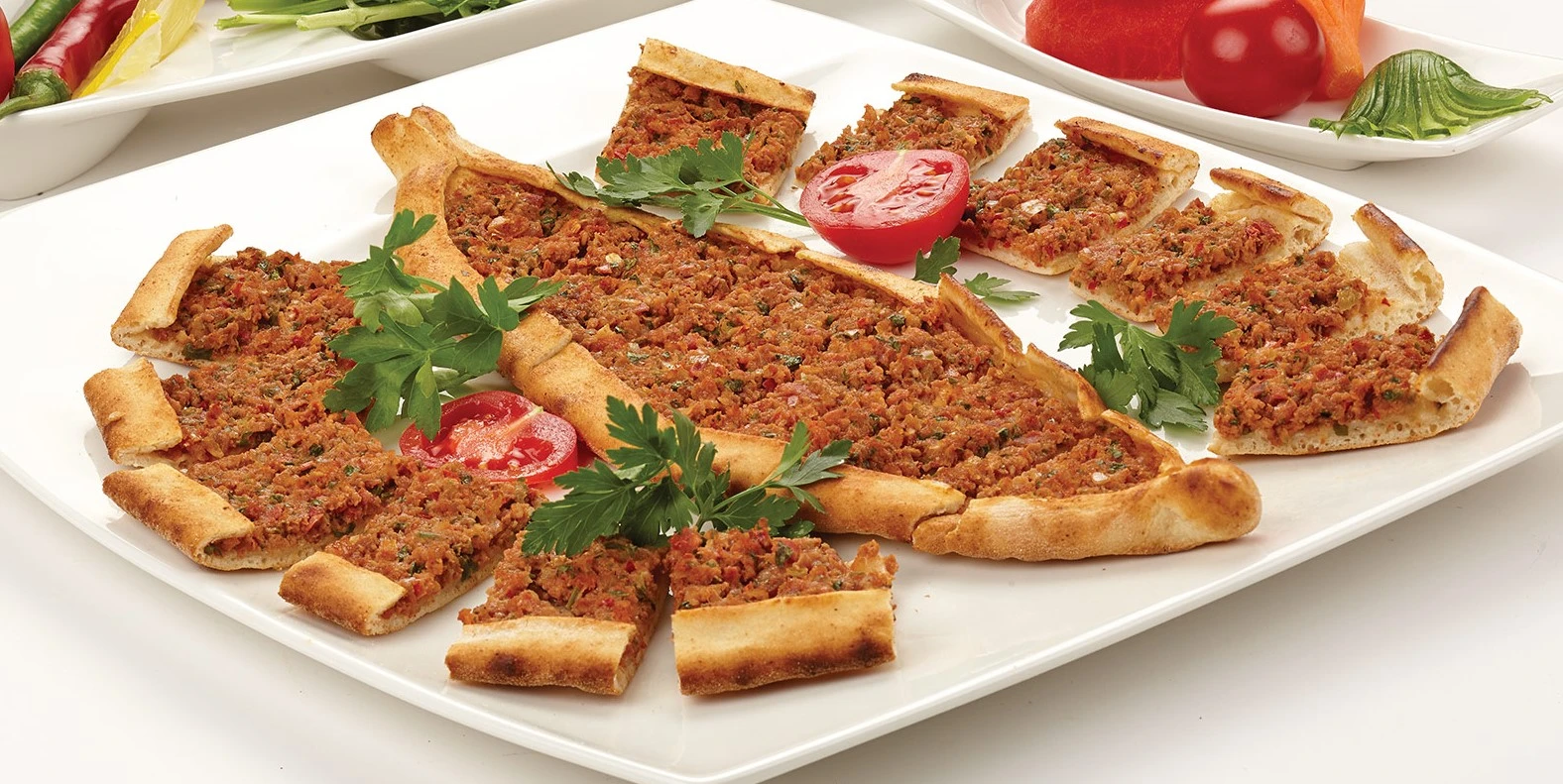
If you’re searching for pide Dubai, discover one of Turkey’s most beloved oven-baked dishes: Turkish pide. Often called Turkish flatbread, pide is known for its distinctive boat-shaped dough, crisp edges, soft centre, and deliciously savoury toppings. From rich cheese pide to versions topped with seasoned meat, eggs, and vegetables, there is a style to suit every taste. But how does Turkish pide compare with another popular flatbread? Exploring pide vs pizza reveals key differences in shape, dough, toppings, and traditional preparation. Whether you’re trying pide for the first time or looking for authentic Turkish food in Dubai, this classic dish is a must-try.
Turkish pide is a traditional Turkish flatbread known for its distinctive boat-shaped design, soft yet slightly crisp dough, and flavourful toppings. Baked in a hot oven, pide is commonly prepared with ingredients such as seasoned minced meat, cheese, vegetables, and eggs, depending on the variety. Unlike ordinary flatbread, its elongated shape and raised edges help hold the toppings while creating a satisfying contrast between the crisp crust and tender centre.
For those searching for pide Dubai, this Turkish speciality offers a delicious way to experience authentic flavours in a casual yet comforting dish. Turkish pide can be enjoyed on its own or shared as part of a larger Turkish meal, making it a popular choice for both first-time diners and lovers of traditional Turkish cuisine.
The history of Turkish pide is closely connected to Turkey’s long tradition of baking bread and preparing dough-based dishes. Over time, regional Turkish cuisines developed their own styles of pide, with different toppings and preparation methods reflecting local ingredients and culinary traditions. Its distinctive boat-like shape, open centre, and oven-baked dough have helped make pide one of Turkey’s best-known traditional foods.
Today, pide remains a popular part of Turkish dining, enjoyed with fillings ranging from seasoned minced meat to melted cheese and vegetables. As Turkish cuisine has become increasingly popular around the world, pide Dubai has also emerged as a sought-after choice for diners looking to experience this classic Turkish speciality.
One of the most recognisable features of Turkish pide is its elongated, boat-shaped form. The raised edges help contain the toppings while allowing the centre to remain soft and flavourful. Traditionally, the dough is stretched into its distinctive shape before being topped with ingredients such as cheese, seasoned meat, vegetables, or eggs.
Pide is traditionally baked at high temperatures in a hot stone or wood-fired oven. This cooking method helps create a lightly crisp, golden crust while keeping the inside soft and chewy. The intense heat also allows the toppings to cook quickly, giving pide Dubai diners the opportunity to enjoy a freshly baked Turkish speciality with a satisfying combination of textures and rich flavours.
Want to experience authentic Turkish flavours in a traditional setting? Explore Turkish food at Dubai Festival City and enjoy freshly prepared pide and other classic Turkish favourites.
One of the best things about Turkish pide is the variety of toppings and flavours available. From rich, melted cheese to savoury meat and fresh vegetables, each style offers a different take on this traditional Turkish dish.
When exploring pide in Dubai, some popular varieties to look for include:
Whether you prefer creamy cheese pide or a more savoury meat-filled variety, trying different types is a great way to appreciate the versatility of Turkish pide.
Ready to discover your favourite Turkish pide?
Contact us to learn more about the pide varieties available at Turkish Village and plan your next Turkish dining experience.
Enjoying discovering the different types of Turkish pide?
There’s much more to explore beyond this classic oven-baked favourite. Discover these Traditional Turkish Cuisine Dishes and explore some of the most delicious and iconic flavours of Turkey.
If you’re wondering what does pide tastes like, Turkish pide offers a satisfying combination of crisp edges, soft and chewy dough, and rich, savoury toppings. Traditionally baked at high heat, the dough develops a lightly crisp exterior while remaining tender and chewy in the centre, creating the distinctive texture associated with Turkish pide.
The flavour can vary depending on the topping. Cheese pide has a rich, creamy and savoury taste from the melted cheese, while meat-filled varieties offer deeper, more savoury flavours from seasoned minced meat and spices. Other toppings, such as vegetables, eggs, or Turkish sucuk, can add sweetness, richness, spice, or additional savoury notes.
Freshly baked pide can also have a subtle toasted or smoky flavour from the hot oven, which complements the toppings without overpowering them. This combination of textures and flavours makes pide Dubai a tempting choice for anyone looking to explore traditional Turkish cuisine. Whether you prefer a simple cheese topping or a more flavourful meat-filled version, the pide flavour changes with every combination.
Although Turkish pide, lahmacun, and pizza are all oven-baked dough dishes, they differ in shape, texture, toppings, and traditional preparation. Understanding these differences can make it easier to choose the right dish when exploring Turkish cuisine in Dubai.
Dish
Shape & Dough
Typical Toppings
Key Characteristic
Pide
Boat-shaped with raised edges
Cheese, minced meat, eggs, vegetables
Soft centre with crisp edges
Lahmacun
Thin and round
Minced meat, vegetables, herbs, spices
Thin, crisp, and often served with lemon
Pizza
Usually round with a thicker or thinner base
Cheese, tomato sauce, meats, vegetables
Cheese and tomato-based toppings
When comparing pide vs pizza, the biggest differences are often the dough shape, topping combinations, and cooking traditions. Pide is typically elongated with an open centre and raised edges, while pizza is generally round and commonly features tomato sauce and cheese. Lahmacun is thinner and lighter, with a finely spread meat and vegetable topping.
For those looking for traditional pide in Dubai, trying all three can be a great way to appreciate how different cultures have developed their own distinctive styles of baked dough dishes.
Make a Reservation at Turkish Village and enjoy freshly prepared pide, lahmacun, and other traditional Turkish favourites.
Turkish pide is satisfying on its own, but pairing it with complementary Turkish dishes and drinks can create a more complete dining experience. The right side can balance the rich, savoury flavours of the toppings while adding refreshing textures and flavours to the meal.
Ayran, a traditional Turkish yoghurt drink, is a classic pairing for pide. Its cool, lightly salty, and refreshing taste works particularly well with rich meat or cheese pide, helping to balance the overall meal.
Fresh salads can provide a crisp contrast to warm, oven-baked pide. Tomato, cucumber, herbs, and other fresh ingredients can add brightness alongside the savoury flavours of the pide.
A selection of Turkish meze can turn pide into part of a larger spread. Creamy, smoky, or vegetable-based starters provide different textures and flavours that complement the warm dough and savoury toppings.
For those who prefer a warm drink, Turkish tea can be enjoyed after a pide meal. Its bold, refreshing character makes it a traditional way to round off a Turkish dining experience.
Knowing how to eat Turkish pide can make the experience even more enjoyable. Pide is traditionally served hot and freshly baked, allowing you to appreciate its crisp edges, soft centre, and flavourful toppings while they are at their best.
The elongated pide is usually cut into smaller pieces, making it easy to share or enjoy bite by bite. Fresh Turkish salads can add a crisp and refreshing contrast to the warm, savoury bread, while yoghurt-based sides can provide a cool and creamy balance to richer toppings such as meat or cheese.
For drinks, ayran is a popular choice with savoury Turkish dishes, offering a refreshing complement to pide. Turkish tea can also be enjoyed during or after the meal, particularly for those who want to finish their dining experience with a traditional Turkish beverage.
Discover the best Turkish restaurant in Dubai and explore the traditional Turkish dining experience at Turkish Village.
Yes, Turkish pide can be a convenient choice when dining with family or friends. Its distinctive elongated shape makes it easy to slice into individual pieces and share across the table, allowing everyone to enjoy the same freshly baked dish.
Pide works particularly well for family meals, group dining, and casual lunches, especially when ordering different varieties to explore a range of flavours. Sharing cheese, meat, or other styles of Turkish pide can also make the meal a more enjoyable way to experience different traditional toppings together.
For anyone exploring pide in Dubai, sharing a selection of pide alongside Turkish salads, meze, or refreshing drinks can create a relaxed and flavourful Turkish dining experience.
If you are planning a Turkish meal with your loved ones, discover more about family dining in Jumeirah and see why Turkish Village is a great place to enjoy traditional Turkish flavours together.
If you’re looking for pide in Dubai, Turkish Village offers a chance to enjoy this classic Turkish speciality as part of an authentic Turkish dining experience. Known for its distinctive boat-shaped dough and flavourful toppings, pide is a satisfying choice for anyone who enjoys freshly baked Turkish dishes.
For a richer and creamier option, cheese pide is a popular choice, while meat- and vegetable-topped varieties offer different savoury flavour profiles. The combination of baked dough and flavourful toppings makes pide a natural choice for diners exploring traditional Turkish cuisine in Dubai.
For a complete Turkish dining experience, pair your pide with suitable starters, salads, yoghurt-based sides, or traditional Turkish drinks. For the most accurate information on current varieties, ingredients, and availability, refer to the restaurant’s latest menu before ordering.
Make a Reservation at Turkish Village and discover a selection of traditional Turkish flavours in Dubai.
What is Turkish pide?
Turkish pide is a traditional Turkish flatbread with a distinctive elongated, boat-shaped design, raised edges, and a soft centre with crisp edges. It can be topped with ingredients such as cheese, seasoned minced meat, vegetables, eggs, or Turkish sucuk.
What does Turkish pide taste like?
Turkish pide typically has a lightly crisp exterior, soft and chewy dough, and savoury toppings. Its flavour varies depending on the ingredients, with cheese providing a rich and creamy taste and meat-based varieties offering deeper savoury and spiced flavours.
Why is Turkish pide boat-shaped?
The distinctive boat-shaped design of Turkish pide features raised edges that help contain the toppings while keeping the centre soft and flavourful. This shape is one of the most recognisable characteristics of traditional pide.
What are the most popular types of Turkish pide?
Popular types of Turkish pide include cheese pide, meat pide, sucuk pide, egg pide, and vegetable pide. Each variety offers a different combination of flavours and toppings.
What is the difference between pide and pizza?
Pide is traditionally elongated with raised edges and an open centre, while pizza is generally round. Pide can feature toppings such as cheese, seasoned meat, eggs, and vegetables, whereas pizza commonly uses combinations of tomato sauce, cheese, meat, and vegetables.
What is the difference between pide and lahmacun?
Pide is generally boat-shaped with raised edges and a soft, chewy centre, while lahmacun is thinner and round with a finely spread topping of minced meat, vegetables, herbs, and spices. Lahmacun is also commonly served with lemon.
What goes well with Turkish pide?
Turkish pide can be paired with ayran, fresh Turkish salads, meze, yoghurt-based sides, and Turkish tea. These accompaniments can provide refreshing flavours and contrasting textures alongside the warm, savoury pide.
Is Turkish pide good for sharing?
Yes. The elongated shape of Turkish pide makes it easy to slice into smaller pieces and share. Different varieties can also be ordered to allow diners to experience a range of traditional toppings and flavours together.